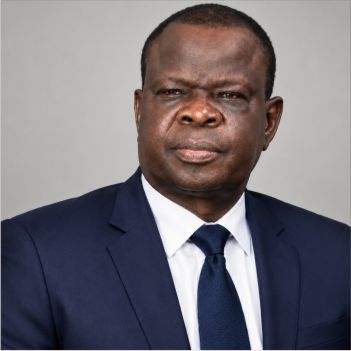
Brokerage
Investing Through the Capital Market in Nigeria
Why investing in the Nigerian Capital Market really matters for you and how our brokerage services can help you.
The capital market is one of the foremost ways to invest your money in Nigeria, to grow your wealth over time, preserve it, or transfer it.
You can achieve this through investing in quality companies by buying their stocks, bonds, and other capital market assets.
Your money has the potential to grow over time through compounding and long-term value appreciation.
Your investment can earn returns for you. The fundermental questions that you must ask before deciding to invest in the capital market is:
Why does it matter?
What is it?
How does it work?
Why now?
This Is Why It Matters For You
If you want to grow your money,
If you want to protect yourself and your family against inflation,
If you desire to build long-term wealth then you must know that
Keeping your money idle in a bank account may feel safe and secure, but over time, inflation reduces the real value of that money.
This is why those who are financially smart, the elites, turn to the capital market
The capital market gives individuals and businesses the opportunity to invest in assets such as:
shares, bonds, ETFs, mutual funds, and other regulated investment products.
Through these investments, you can potentially earn returns from or get your money back through:
• Capital appreciation,
• Dividends,
• Interest income,
• And long-term wealth growth.
However, the capital market is regulated and structured, meaning it follows clear rules and has an organized system. You cannot simply walk into the stock exchange and buy investments directly by yourself. This is where brokerage firms come in.
This Is What You Must Know
A Broker Dealer or a brokerage firm is a licensed financial institution that acts as an intermediary between investors and the capital market. An investor is someone like you who commits capital (makes an investment) in order to gain financial returns.
In Nigeria, brokerage firms are regulated by the Securities and Exchange Commission (SEC) and operate within the Nigerian capital market ecosystem.
The role of brokerage firms is to help investors:
• Open investment accounts,
• Buy and sell securities (Stocks or Shares),
• Access market opportunities,
• Execute transactions,
• Receive investment reports,
• Give advice on investments and investment strategies
• And safely participate in regulated investments.
Think of a brokerage firm as the authorized gateway that connects ordinary investors to the capital market.
Without this system, the market would become disorganized, unsafe, and difficult to regulate.
This Is How Investment Through a Brokerage Firm Works for You in Nigeria
Step 1 — Choose a Licensed Brokerage Firm
The first step you must take is selecting a SEC-registered brokerage firm or regulated investment platform.
This is important because regulated firms are expected to follow compliance, operational, and investor protection standards.
Step 2 — Open an Investment Account
The brokerage firm will typically request the following documents and paper works, depending on the type of investment account:
• Identification,
• BVN (Only required if you live in Nigeria),
• Contact details,
• Bank information,
• And other KYC (Know Your Customer) requirements.
This helps protect both you the investor and the financial system.
Click here to see the requirements for an investment account
Step 3 — Fund Your Account
After your account is approved, you can deposit funds into your investment account.
Step 4 — Select Investment Products
Depending on your financial goals and risk level, you may choose:
• Stocks,
• Bonds,
• Treasury instruments,
• Mutual funds,
• ETFs,
• REITs,
• Or other regulated products.
Different investments carry different levels of risk and potential return.
You are not sure which to pick? Dont worry, we will guide you once we understand your financial goals for investing and your risk tolerance level.
Step 5 — The Brokerage Executes Transactions
Once you place an order to buy or commit your funds into any of the assets listed in Step 4 above, harmony Securities, the brokerage firm executes the transaction within the regulated market system. We acts as the official intermediary between you and the stock market.
Final Step 6 — Monitor and Manage Your Investments
After investing, you can track:
• Portfolio performance,
• Dividends,
• Market value changes,
• investment growth over time.
• And liquidate your asset depending on your asset type.
Long-term investing usually requires patience, discipline, and proper risk management.
Please see our FAQ for more answers to terms and investment concepts
Now you know the WHY, WHAT, and HOW?
What will you do with what you know now?
Remember, It is applied knowledge that gives you power, and produces your desired results.
You can apply your knowledge by taking your first investment step.
The Nigerian capital market is becoming more accessible than ever before.
Technology has made investing easier, faster, and more convenient for financially smart people like you. However, regulated brokerage firms still remain an essential part of how the stock market functions safely and legally.
So, Before investing:
• Verify that the platform or brokerage is properly regulated,
• Understand the risks involved,
• Avoid unrealistic return promises,
• And invest based on knowledge, not emotions or hype.
Investment is not gambling, and building wealth genuinely usually takes time.
The goal is not to make quick money, but to participate wisely in regulated financial opportunities that can support your long-term financial growth and stability.
Click here to to begin a whats App conection with us and tell us moreWhat is the next step you will like to take?
Our Licenses And Registrations
We are licensed to operate. we are registered with regulatory bodies and agencies that ensurs that we follow ethical practices and most importantly, to be trusted in keeping your capital and investements safe.
Licensed Broker/Dealer

Licensed Dealing Member
Licensed Broker/Dealer
Licensed Broker/Dealer

Registered Business

Licensed Business
Our Capital Market Services
Our license, compliance, experience and expertise certifies us to operate in the Nigerian Capital Market as...
LICENSED BROKER /DEALER
We do:
• Purchasing and Sales of Shares of Quoted and Unquoted OTC Companies.
• Stock Broker to New Issuers.
• Verification /Lodgment of Shares Certificate into CSCS A/C Of Clients.
• Share Transmission and Nominal Transfer.
• Dematerialization.
• Estate.
To learn if our brokerage services is what you require, click this link to see what this service can do for you and how it differs fom our wealth management services See comparisons
Click here to to begin a whats App conection with us and tell us moreHow long has your investment been a problem?
Brokerage and Capital Market Frequently Asked Questions
We have provided answers to your questions in the brokerage services we offer in the Nigerian Capital Market.
Inflation is a sustained increase in the general level of prices. If your money earns 3% but prices are rising by 10%, your purchasing power is falling even though your account balance increased. This is why investors often consider real returns, returns after taking inflation into account.
Because earning money and managing money are different skills. Someone can earn ₦5 million a month but spend ₦5.5 million. Another person might earn ₦500,000 and consistently save and invest part of it. A high income can improve your financial position, but it does not automatically create wealth. Your financial surplus—the amount left after your expenses—is what gives you the capacity to build wealth.
Compounding occurs when your investment earnings generate additional earnings. For example, if you invest ₦1 million and earn returns, future returns can be earned not only on the original ₦1 million but also on previous earnings. This is why time is one of the most powerful ingredients in wealth creation.
Base your spending on a conservative estimate of your income rather than your best month. When income is high, build reserves rather than immediately increasing your lifestyle. During strong months, save more so that the money can support you during weaker months. An emergency fund is particularly important for people with irregular income.
Common wealth-building routes include: Building a profitable business Investing in diversified financial assets Owning productive real estate Developing valuable skills and increasing earning power Owning intellectual property or other productive assets Consistently saving and investing over long periods Most sustainable wealth-building strategies involve owning assets that can produce income or appreciate in value.
Income is a flow of money. Wealth is a stock of accumulated resources. A person can earn a large income but spend almost everything. Another person can have a moderate income but consistently save and invest and eventually accumulate substantial assets. The goal isn't merely to increase income. It is to convert part of your income into productive assets.
Usually longer than social media makes it appear. The time depends on your income, savings rate, investment returns, starting capital, taxes, inflation and consistency. Building meaningful wealth is generally a long-term process, not a quick event. Anyone promising that you can reliably become wealthy very quickly with little effort or risk deserves serious scrutiny.
There is no universal percentage that works for everyone. A common starting point is to aim for 10% or more, but your actual target should depend on your income, expenses, debt, emergency savings and financial goals. If 10% is impossible today, start with what you can afford and gradually increase it. The important thing is to develop the habit of consistently spending less than you earn.
Examples include: Dividend-paying investments Bonds and other interest-bearing investments Rental property Businesses Royalties from intellectual property Certain funds and other income-producing assets However, "passive income" does not necessarily mean no work. Many assets require research, management, maintenance, capital or ongoing oversight.
Different money has different jobs. Money needed soon should generally be kept somewhere safe and accessible. Emergency funds should prioritize liquidity and preservation of capital rather than aggressive returns. Money intended for long-term goals may be invested in appropriately diversified assets. The key question is: When will I need this money, and how much risk can I afford to take with it?